

History
History of New Wappetaw
The name Wappetaw has a pleasant meaning and tells an interesting history.
The Seewee Indians gave the name Wappetaw, meaning “Sweet Water,” to a thin strip of high land between the salt marshes of the Wando River and Seewee Bay in northern Charleston County. The site is about 15 miles north of Mt. Pleasant and about twenty miles south of McClellanville. Travelers along Highway 17 will indentify Wappetaw as the locale of the modern Seewee Restaurant and Seewee Outpost.
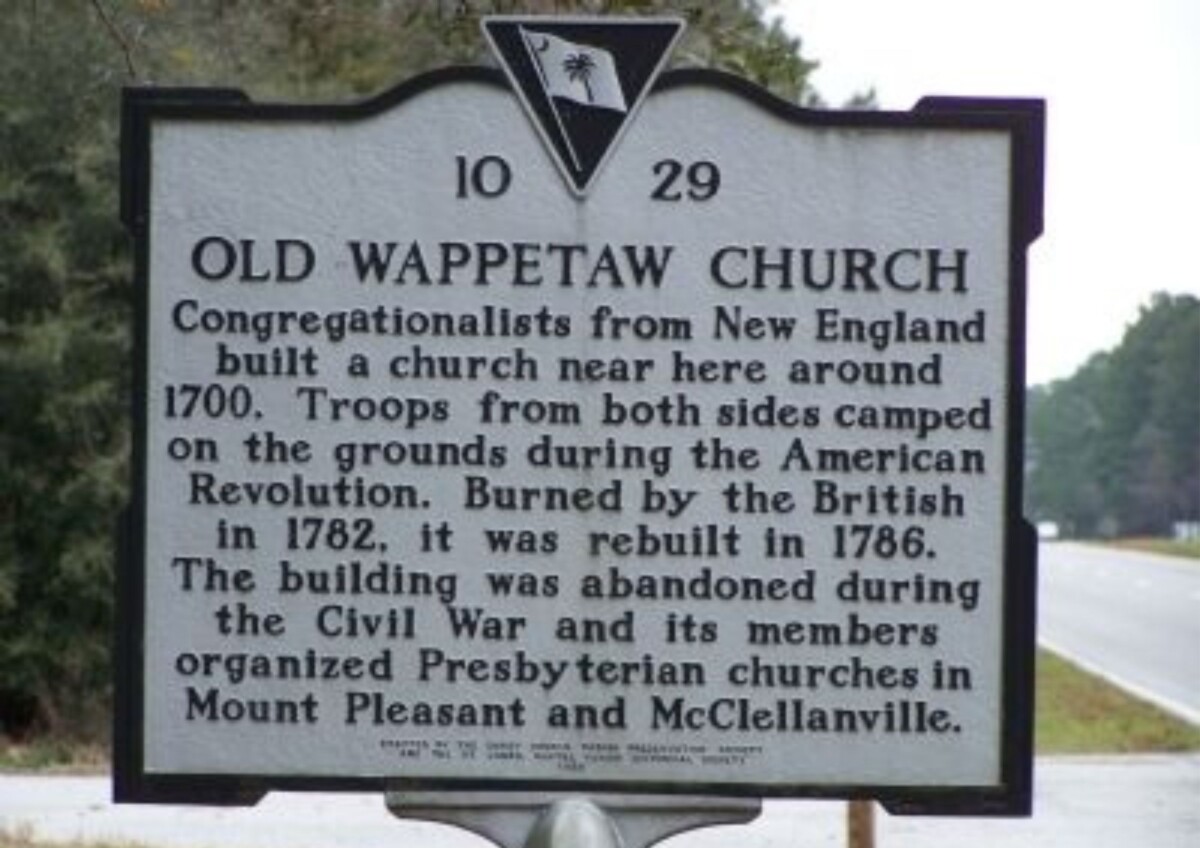
In 1696, a valiant band of 51 New England Congregationalists settled in the area after fleeing Indian wars and the Salem witch trials. Governor Archdale of Carolina invited the settlers to come after learning that they had shipwrecked and spent a winter on Cape Hatteras. By 1699 the Congregationalists established churches at Wappetaw and at nearby Cainhoy. The church at Wappetaw became The Wappetaw Independent Congregational Church, distinguishing itself from the Anglican Church of Christ Church Parish, founded in 1707.
As fellow Calvinists and Dissenters to the Anglican Church, Congregationalists were allied to Presbyterians, Quakers, and other non-Anglicans. It came to pass that the church at Wappetaw was mostly served by Presbyterian ministers. In 1786, after independence, the church was incorporated as Wappetaw Independent Church in Christ Church Parish.
Residents of Wappetaw began creating second homes on the waterfronts of Mt. Pleasant and of the community which would become McClellanville. The Wappetaw church then lost many members in the Civil War, and further movement of families to Mt. Pleasant and the newly forming village of McClellanville led to cessation of worship at Wappetaw. The small building, described by the historian Petrona Royall as of “plain design” and therefore of classic meeting house style, deteriorated. Mrs. Royall said of its demise, “It never fell, but just seemed to settle lower and lower until it just disappeared.” It was gone by 1898.
Presbyterians in McClellanville founded New Wappetaw Presbyterian Church on August 23, 1872. Construction on the sanctuary began in 1874 on land donated by Robert Venning Morrison. The first worship service in the building was held on June 20, 1875, and the church was dedicated by the famous preacher, John Gerardeau, in August 1875. Presbyterian worshippers at Mt. Pleasant, where there had been a chapel prior to the war, established the Mt. Pleasant Presbyterian Church.
The original church site at Wappetaw became “Old Wappetaw.” It is an attractive place, located on Fifteen Mile Landing Road, just a few hundred yards behind the Seewee restaurant. Gravestones of a number of early residents of Wappetaw may be seen.
On August 1, 1877, a final gathering of four surviving members of “Old Wappetaw” transferred all property of the corporation to New Wappetaw Church. Properties transferred included all monies, bank stock, communion table linen, the silver communion service, 115 acres of pineland, and the church lot and burial ground. The pineland was sold in 1911 and used for renovation of New Wappetaw’s sanctuary. The monies must have been scanty and the stock of little value.
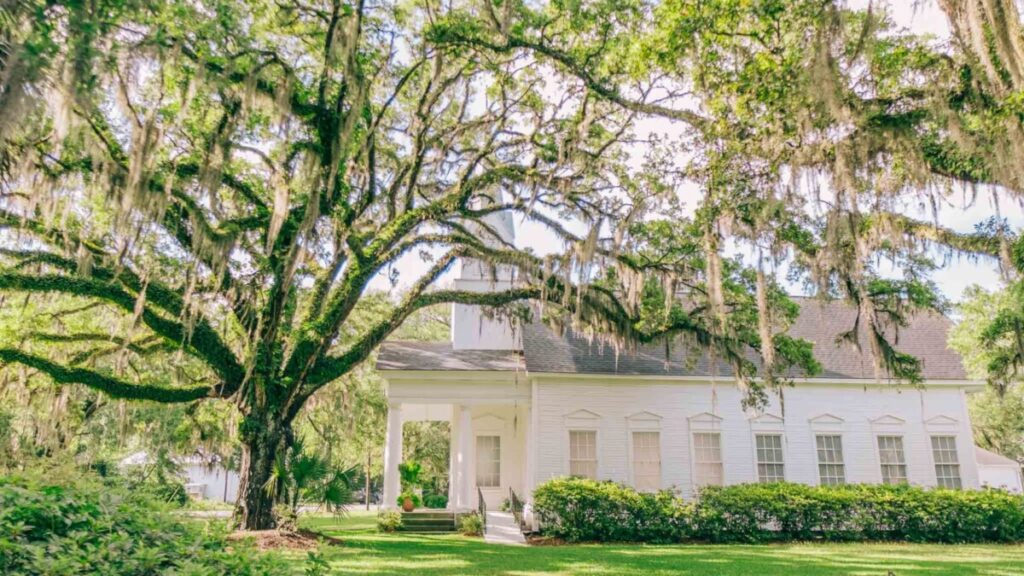
New Wappetaw’s original church steeple was located on the left side of the building’s front. In 1951, the front was remodeled, with a larger portico added and the steeple moved to the center. A separate Sunday School building was constructed in 1923, and was replaced by the present attached structure in 1938.
Visitors notice a metal rod spanning the interior of the sanctuary. It is said that the building leaned to one side after a hurricane in 1916. Men of the church united to push it back into shape. The occasion brought arguing factions together, allowing someone to say, “Look, the lion and the lamb are lying down together.”
Old Wappetaw Timeline
A Little More History
New Wappetaw Presbyterian Church was organized in the newly forming village of McClellanville on August 23, 1872. The initial meeting of the congregation was held in Union Chapel, actually a small schoolhouse located where there is now a park at Pinckney and Oak Streets. Reverend Peter Gowan presided for Charleston Presbytery, and the first sermon was given by Rev. Gilbert R. Brackett.
Many founding members of the new congregation were from families which had attended the Wappetaw Independent Congregational Church in Christ Church Parish, located about twenty miles southwest of McClellanville. “Old Wappetaw” was established by a group of New England Congregationalists (Puritans or Dissenters) in 1696 or 1697. It was one of the first churches organized in the Carolinas. During the last few decades of its existence, Old Wappetaw Wappetaw was served by Presbyterian ministers.
Our predecessor church lost many members in the Civil war. Movement of other members to Mt. Pleasant and to the McClellanville area resulted in cessation of worship at Old Wappetaw. Old Wappetaw church described by the historian Petrona Royall as “of plain design” and therefore of the classic meeting house style, gradually deteriorated. It was gone by 1898, but the cemetery remains on Seewee Road, a few hundred yards behind the Seewee restaurant.
The name “Wappetaw” is from the Seewee Indian term for the place, meaning “Sweet Water.”
On August 1, 1877, a final gathering of four surviving members of Old Wappetaw transferred all property of the corporation to New Wappetaw Church.
New Wappetaw began construction of its present sanctuary in 1874 on a lot donated by Robert Venning Morrison. The first sermon in the building was delivered on June 20, 1875 by Rev. Thomas English. In August 1875 the church was dedicated by the famous preacher, John Girardeau, D.D
The church originally had a bell tower located on the left side of the building’s front. The front of the building was remodeled in 1955. The bell tower was moved to the center of a larger portico and a steeple was added. A cross was added to the steeple in 2009.
The metal rod spanning the interior of the sanctuary was installed after the hurricane of 1916. It is said that the building leaned to one side after the storm and that men of the church united to push it back into shape. The occasion brought arguing factions together, allowing someone to say, “Look, the lion and the lamb are lying down together.”
Stained glass windows were added in 1960. Many members disapproved, believing the change was a departure from the Presbyterian tradition of creating plain buildings which would not distract worshippers from the worship of God. Again, after considerable controversy, the lion and the lamb settled down, and the first worship was held in the remodeled sanctuary on June 5, 1960.
A separate Sunday School building was constructed in 1923. It was replaced by the present attached building in 1938.
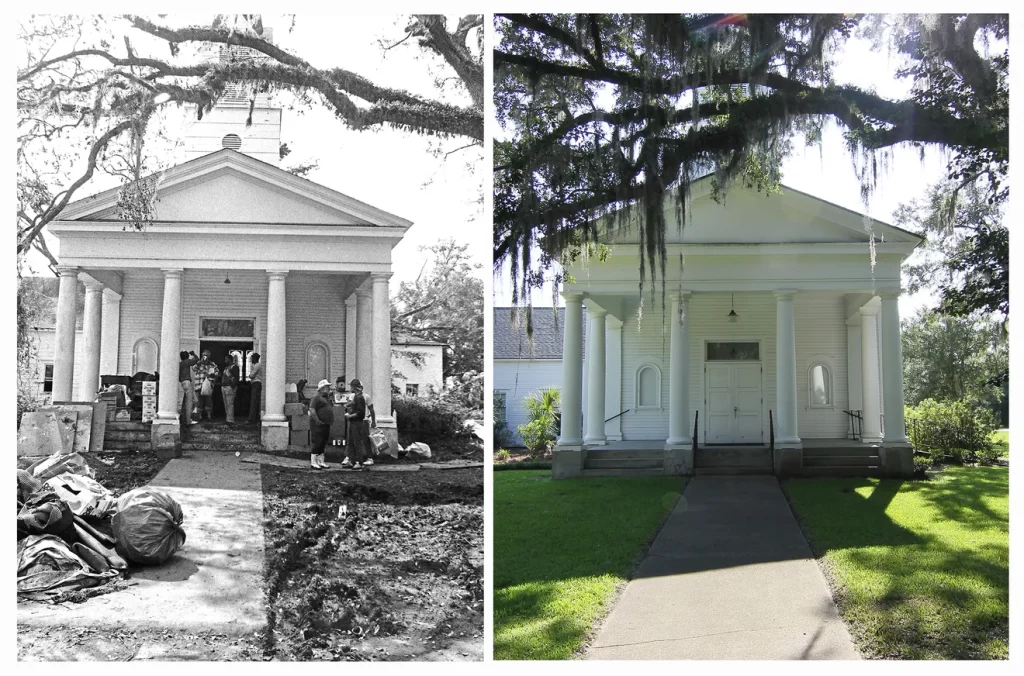
New Wappetaw Church was greatly damaged by Hurricane Hugo on Friday, September 29, 1989. The congregation gathered for worship on the front steps two days later and met regularly in the fellowship hall over the next two months. With hard work by members, the help of many volunteers, and financial assistance from outside individuals and institutions, the entire church was rehabilitated. The pews were taken from the sanctuary to the Presbyterian Church in Beaufort, South Carolina for restoration. In working on the floors of the sanctuary it was realized that two layers of flooring had been added over the original floor. The original boards were taken up, refinished, and replaced.
Worship in the sanctuary resumed in December 1989, and a communion service was held on Christmas Eve. It was not until the spring of 1990 that rehabilitation of New Wappetaw was complete.
In 2004 an addition to the Sunday School building provided expanded rest rooms and space for a crib nursery. In 2018 a new addition provided two large classrooms, freeing older upstairs rooms for other uses. Our church continues to grow for service to God and our community.
New Wappetaw Church, beautiful in its simplicity, is a fitting tribute to the glory of God.